Today's topic was covalent bonding. Covalent bonding is bonding between two non metals. In covalent bonding an electron is not lost or gained by an atom or molecule but rather shared between them in bonds.

F2 is a very simple example of a covalent bond. They share electrons with each other.
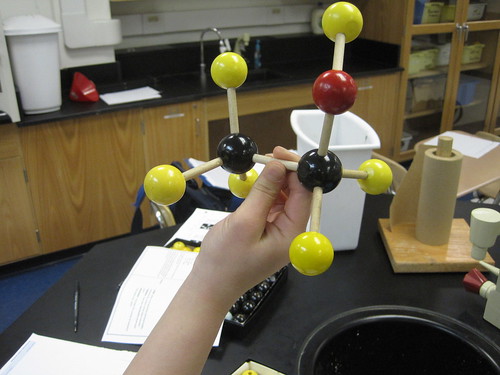
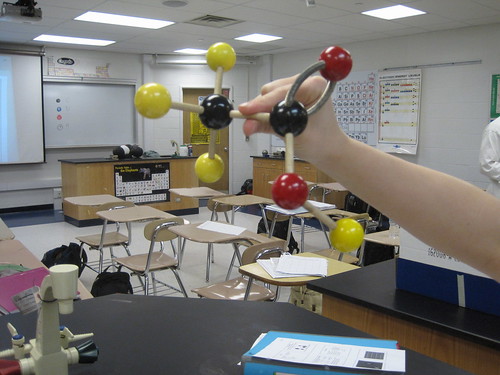
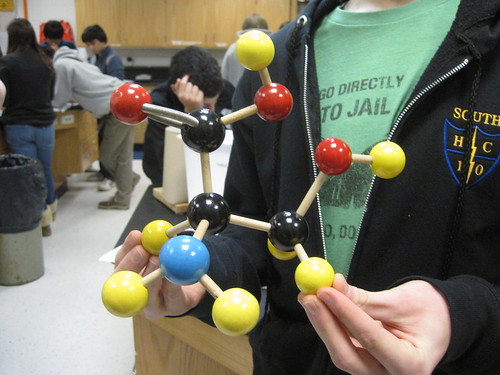
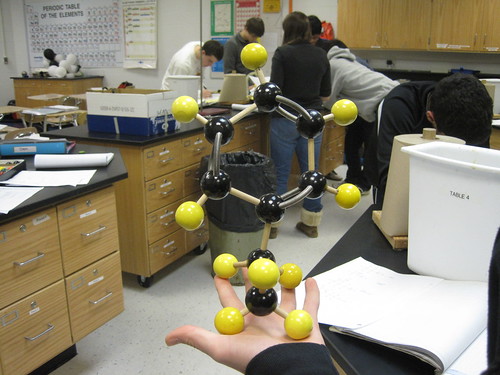
Fluorine only has a single bond. Molecules can have up to triple bonds and can have crazy shapes and patterns depending on what is being bonded and how many are being bonded.

In class we also went over how we can represent covalent bonds in diagrams. One in the pic above is the simpler of the two the other however helps a lot later on when getting into representing bigger molecules. The Lewis Structure.
We got a set of guidelines on how to make a Lewis structure.
1) count the total number of valence electrons and include any ions (+) or (-)
2) Predict the layout of the diagram. First atom listed in the formula is usually in the middle. Just be sure to remember that H can only be bonded to one other atom.
3) Find the number of valence electrons left over from forming the single bonds. Each bond counts as 2 electrons
4) Place the electrons around the outside atoms until each outside atom has 8 electrons around it. Just remember that H follows the duet rule. It only has 2 electrons.
5) Its OK to have more than 8 electrons around the central atom as long as it is the third row or lower on the periodic table. If there isn't enough electrons to put 8 around the central atom then go back and change some of the single bonds to double or triple bonds. C, N, O, and S are commonly know to form double and triple bonds.
Well that about covers everything we went over in class today. HW for today was the Lewis Structure worksheet.
Next scribe is Chris.